
Nobody called me and said I was retired.
That’s the strange part.
There wasn't a meeting. Nobody took my helmet away. Nobody sat me down, shook my hand and said, “Noah, thanks for everything.” I became a free agent. I kept training. I kept watching film. I kept my phone nearby.
And the phone didn't ring.
At first, you don't think much of it. Rosters change. Teams have needs. Somebody gets hurt. Somebody gets traded. You tell yourself to stay ready because football has a way of finding guys who stay ready.
Then training camps come and go.
Teams fill their depth charts.
Season 6 starts.
Eventually you look around and realize twelve teams are playing DFL football and you're sitting at home watching them.
So technically, I guess I'm still a free agent.
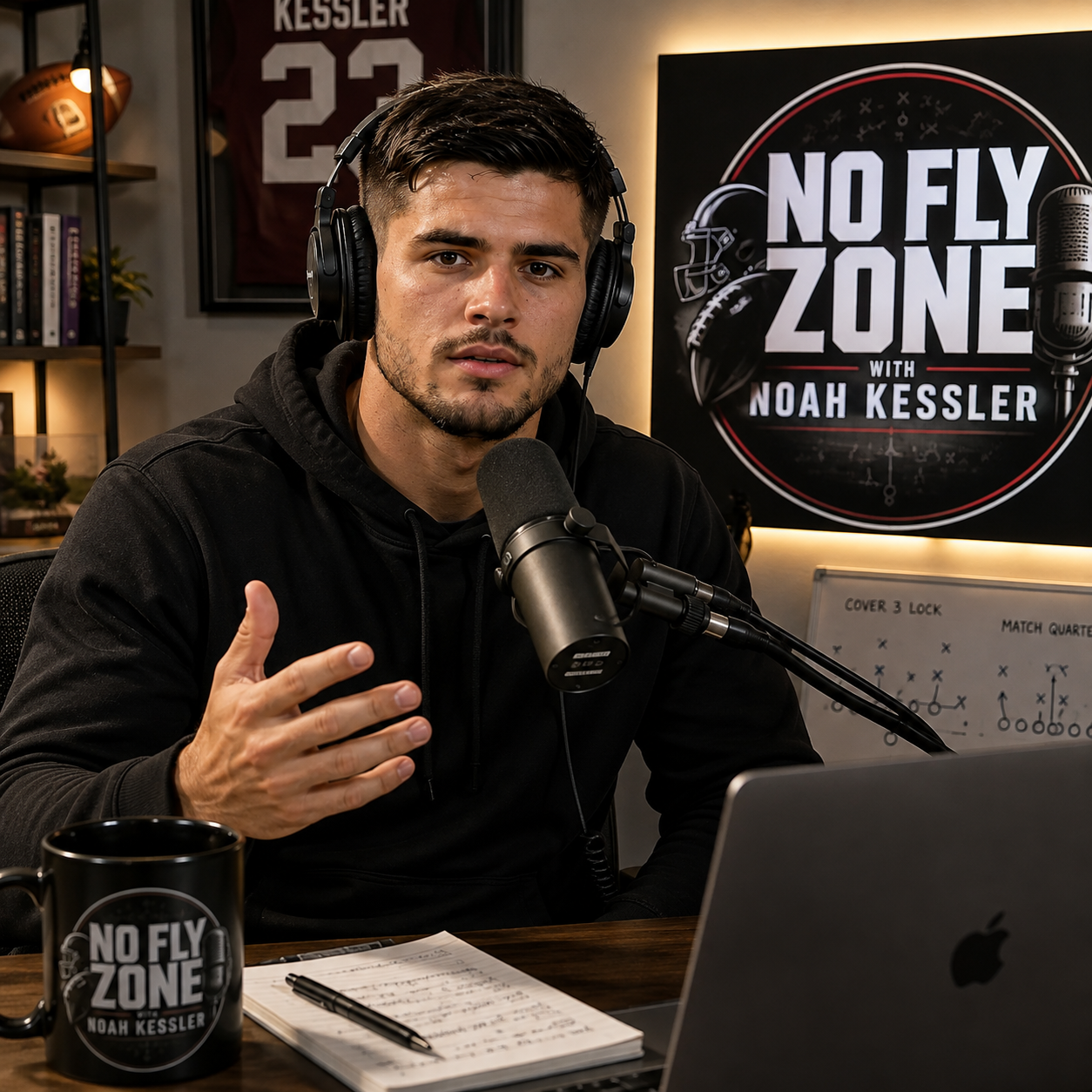
But I'm also sitting in front of a microphone now, so we should probably talk about that.
Welcome to No Fly Zone.
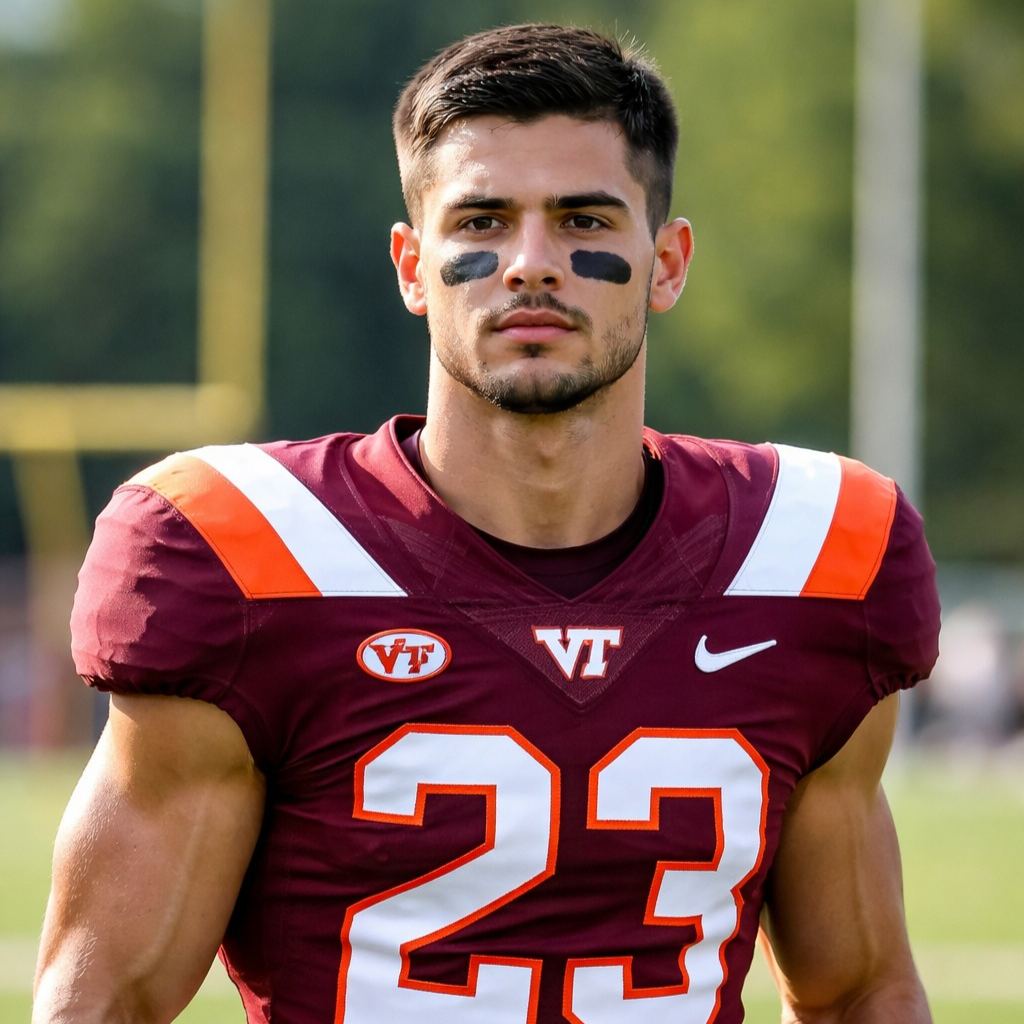
For those who don't know me, I'm Noah Kessler. I played defensive back at Virginia Tech before entering the DFL during its founding era. I spent my professional career with the organization that started in Charlottesville and eventually became the San Antonio Coyotes.
And I loved playing there.
I want to say that now because I'm sure somebody will eventually decide this show exists because I'm angry at San Antonio. I'm not. There are people in that organization I care about. Guys I went to war with. Coaches who made me a better player. Staff who spent more hours in that building than any of us ever saw.
Would I rather be playing?
Absolutely.
Do I think I can still play?
Absolutely.
But there's a difference between believing you can do the job and somebody being willing to pay you to do it.
That's professional sports.
The League I Left Isn't the League I Joined
Something else happened while I was waiting for that phone call.
The DFL got big.
I mean really big.
When I entered this league, it was a Virginia operation. Four teams became six. You knew everybody. Half the road trips barely felt like road trips.
Then came Season 5. Suddenly the map started stretching south.
Now look at Season 6.
Denver. Dallas. Atlanta. Miami. Tampa Bay. Charlotte. Charleston. San Antonio.
Almost every original organization has moved into a larger market. Richmond is still holding down Virginia, but otherwise this thing looks completely different from the league I joined.
And Commissioner Kyle Fitzgerald doesn't seem interested in slowing down.
I played through some of that transition. I literally moved with it. One day you're representing Charlottesville; eventually you're playing football in San Antonio.
That's not just a change of address.
That's the story of this league.
People are starting to ask whether the DFL can eventually replace the NFL as the dominant football league in America.
I don't know.
Anybody who tells you they know is probably trying to get you to click something.
The NFL is the NFL. You don't erase generations of history, money and fan loyalty because another league has a few good seasons.
But here's what I do know:
When I entered the DFL, nobody needed to ask that question.
Now they do.
That's remarkable.
And if you're sitting inside the NFL telling yourself there's nothing to worry about, I'd suggest paying attention. Football fans don't owe anybody permanent market share. If somebody gives them a product they enjoy more, they'll watch it.
The DFL has gone from a regional experiment to twelve teams playing across the country in less time than most organizations take to redesign a uniform.
Where it goes from here is anybody's guess.
Okay. Let's Talk Football.
That's enough existential crisis for one episode.
I promised football.
Denver and the Delta Blues are sitting at 8–3 atop the National Conference. Louisville is right there at 7–3–1. Washington leads the Commonwealth at 7–3–1, with Charlotte and Richmond trying to separate themselves behind them.
My old team in San Antonio?
5–6.
I'm not going to sit here and pretend I don't watch them differently from everybody else.
I know that organization. I know what winning there feels like. I also know what losing there feels like.
And when you're 5–6 with a negative point differential—even if it's only minus-one—you don't need somebody on a podcast screaming that the season is over.
It isn't.
But you're out of margin.
Every busted coverage matters now. Every missed tackle matters. Every drive where the defense gets off the field and the offense gives it right back matters.
The good news for San Antonio is that 5–6 hasn't buried them. The bad news is that Denver, Delta and Louisville have already created separation.
You don't control that anymore.
You control whether you're still standing if one of them slips.
Then there's Dallas.
0–11.
Zero points scored.
183 allowed.
I'm going to resist the easy jokes because I know exactly how miserable a locker room can become when everybody outside it treats you like one.
But there is something worth discussing here.
Expansion football is hard.
Fans see a roster and think you have a football team. You don't.
You have a collection of football players.
There's a difference.
A secondary is probably the easiest place for me to explain it. You can have four individually talented defensive backs and still have a terrible secondary. If one guy thinks you're passing off a route and the other thinks you're carrying it, congratulations: you've just created a wide-open receiver.
Good defense is trust.
It's knowing what the guy beside you is going to do before he does it.
It's communication that happens quickly enough that nobody watching on television even notices.
You cannot manufacture that overnight.
Dallas isn't just losing football games right now. They're trying to build an organization while competing against teams that already know who they are.
That doesn't excuse 0–11.
It helps explain how 0–11 happens.
And that's the kind of thing I want us to do here.
There are plenty of places where somebody will tell you who won.
There are plenty of people who will tell you somebody wanted it more, somebody choked, somebody is washed, somebody is the GOAT, and then everybody can yell at each other for three hours.
That's not this show.
I want to tell you why.
Why did that coverage break?
What did the quarterback see?
Why does one defense look faster when the players aren't actually faster?
Why can a talented team keep losing?
Why does a player everybody thinks is finished sometimes succeed in another system?
And yes, occasionally, why does a player think he still belongs in this league when twelve front offices apparently disagree with him?
We'll get to that one.
Kessler's Read
I want to finish every show with something I'm calling Kessler's Read.
One thing I'm seeing around football that I think deserves more attention.
Here's the first one:
The next great DFL competitive advantage isn't finding a quarterback. It's building depth.
Everybody wants quarterbacks. Everybody scouts quarterbacks.
I'm looking at the calendar.
Four seasons a year.
Expansion.
More markets coming.
More games. More practices. More opportunities for players to get hurt, burn out or simply decide their bodies have had enough.
If the DFL keeps growing at this pace, the smartest organization won't necessarily be the one with the best 22 players.
It might be the organization with players 23 through 53 who can actually step onto the field without everything falling apart.
The first front office that really understands that is going to have an advantage.
Maybe I'm wrong.
That's the nice thing about having a microphone. Now everybody gets to keep receipts.
As for me?
I'm still training.
If somebody calls tomorrow and needs a defensive back, I'll answer.
But I'm done spending every day waiting for the phone to ring.
There's too much happening in this league to sit around wondering whether I'm still invited to participate in it.
So I'll participate this way.
I'm Noah Kessler.
Apparently I'm a podcaster now.
We'll see how that goes.
Welcome to the No Fly Zone.